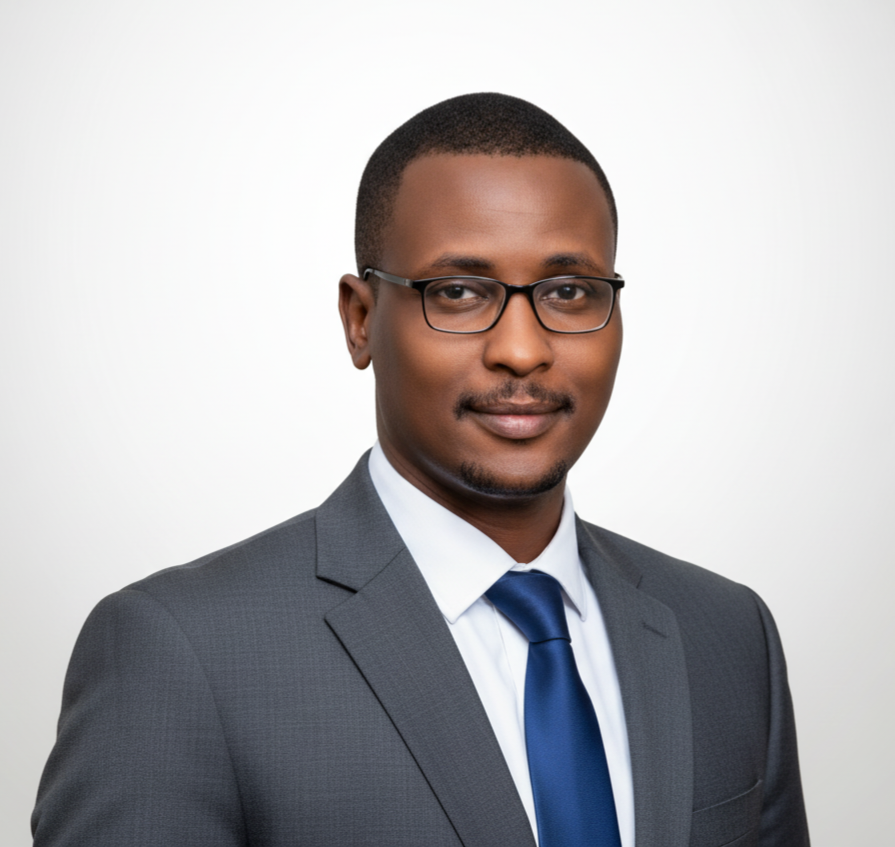
Darfur follow ups : Mohamed Osman
Creating a war narrative is a complex , strategic process aimed at crafting a “story” or intellectual framework that frames the conflict, justifies violence, and mobilizes popular or international support. This is achieved by transforming military events into understandable narratives (heroic, defensive, or victimhood-based) to serve the objectives of a particular side. Components and tools for creating a war narrative include: the dichotomy of good versus evil, or portraying the conflict as an inevitable battle between a “righteous” side (the good guys) and an “aggressor” side (the bad guys), thus simplifying the conflict and obscuring its complex dimensions.
War narratives employ various types, methods, and means, including:
Victimhood narratives:
Invoking historical or contemporary accounts of sacrifice or betrayal to justify military campaigns or the imposition of sieges.
Media and digital manipulation:-
Using social media and digital narratives to disseminate the narrative, which has led to a decline in trust in traditional news and the creation of opposing forces.
Legitimizing Violence:-
Transforming victims into mere numbers or legitimate targets, and cloaking war in a moral or patriotic guise.
Reshaping Reality:-
Parties seek to reshape the past and present to serve their interests, particularly in political and historical conflicts.
Gathering Support:-
Using narratives to mobilize local and international public opinion, and categorizing individuals as patriots or traitors.
Narrative as a Tool of War:-
In the modern era, narratives have become an integral part of war itself, with television channels, social media platforms, and newspapers transforming into parallel battlefields. We live in a world where the most skilled storyteller triumphs over the most insightful analyst, and some stories achieve such success that they acquire the status of legend. At that point, as Brooks writes, “narratives are forgotten as mere fictions and are treated as true interpretations of the world.” In the face of this narrative dominance, it is essential to encourage readers to activate their critical and analytical intelligence to confront the narratives that entice us to accept prevailing ideologies. Brooks emphasizes that what listeners and readers need is to resist the passive mental numbness that hinders our ability to respond consciously.
Given the proliferation of stories and the weakness of human resistance to them, it would be wise for today’s citizens to train in literary analysis skills—the very techniques that are ridiculed and scorned in a world obsessed with technology and tribal affiliations. It seems that many yearn to be relieved of the burden of thinking and expression, which is what truly makes a person free and independent, by delegating these functions to generative artificial intelligence.
Of course, there is a subtle meaning that makes fighting and storytelling inherently opposite; stories create, while wars destroy. Yet, at crucial moments, one submits to the other, and a complex, cooperative relationship develops between them.
Writers have always boasted that the soldier is nothing without them. It is the poet and the novelist who immortalize his heroism for future generations. Conversely, it is equally obvious that the journalist is worthless without the soldier. Without war, there are no epics to be inspired, no films to be made, and no books to be written. (Adapted from Tolstoy’s “War and Peace”)
When it comes to violent conflicts, the cost of this approach is extremely high. With astonishing speed, a weak probability transforms into a strong probability, then into a certainty. People reject the calm, complex, and unappealing narratives that speak of wise compromise, vague diplomacy, or gradual progress, such as those offered by the Resilience Alliance regarding the war in Sudan.
Journalist and critic Carlos Lozada pointed out that hardliners in politics and war possess a “narrative advantage” that makes their stories more appealing. For example, there’s the story of Haitham al-Khala, who, according to his humor and opportunism, shot Hemedti in the backside. His narrative persisted for two years, culminating in Hemedti’s death. This story was picked up by major news outlets and media channels, convincing many peace advocates of the inevitability of a military victory over the doves’ narrative advocating for peace. With the death of Hemedti, the rebel against the Sudanese army
War stories succeed because they simply make people understand themselves through their enemy, rather than looking inward and trying to discover themselves. They also triumph because cultures based on action and achievement, such as military culture, need clear goals and are based on the belief in the possibility of achieving victory. War stories have become more influential since the late 19th century with the emergence of railways and military schools, when countries began to treat war as a serious and organized planning process. However, it also includes simulations of combat and imagining possible future scenarios. Preparing to face different possibilities ultimately means writing plans and scenarios that anticipate what might happen next.
This is what the Islamist movement succeeded in doing: preparing for and planning the war in Sudan without the knowledge of the Sudanese army, and creating a narrative that flooded the media and public sphere with the necessity of continuing the war. This cost the Sudanese people dearly in lives and money, far removed from the demagoguery, the posturing, the rhetoric of victimhood, and the self-serving opportunism.
The Rapid Support Forces entered the war as a politically and socially isolated force, pursued by the media and diplomatically, based on the narratives at the beginning of the war. However, what many fail to understand is that the balance of power has shifted with the entry of other parties into the current Sudanese war.
The formation of the alliance, whether we like it or not, has complicated the situation and made it difficult to address the world with a narrative of Rapid Support Forces (RSF) violations.
The issues, topics, and even objectives have become more complex, making it difficult to convince the world that the RSF alone is responsible for the war, violations, and peace.
The inclusion of allies within the alliance, including the RSF itself, such as the Sudan People’s Liberation Movement-North (SPLM-N), the Sudan Liberation Movement-Transitional Council (SLM-TC), and the Justice and Equality Movement (JEM) led by Suleiman Sandal, which some initially dismissed as parallel entities to the central Sudanese government controlled by the Sudanese army, or as a government established or backed by the RSF, has made it impossible to frame the current war using the politically, socially, and diplomatically worn-out narrative of a “Janjaweed war against civilians.”
Perhaps the Rapid Support Forces, with their political vision, were able to foresee the future, recognizing the necessity of involving others in this war and imbuing it with a nationalist character. Or perhaps the Sudan People’s Liberation Movement (SPLM), with its political experience, seized the opportunity to capitalize on the momentum generated by the April War to achieve its goal of dismantling the central government, as outlined in the New Sudan project.
However, this situation brought many rapid developments to the fore, such as defections, accusations, and rhetoric of victimhood, as well as the decline of neutral discourse and the complete disappearance of some political blocs, according to prevailing narratives. This led to the emergence of numerous and intriguing youth platforms, despite their existence since the beginning of the war as supposedly neutral platforms.
For example, the activities of the youth network working to stop the war have recently diminished, particularly in political activism, following the split of the civilian faction (Progress) into the Establishment and Resilience movement. This may have been due to internal disagreements, though this is not highly probable. What is more likely is that their discourse is inconsistent with and fails to keep pace with the new political landscape. What is new in post-April war Sudan is that the network has not developed its discourse or its administrative structure. Rather, all its actions and actors, both civilian and military, have manifested in the creation of a new body called the “Sudanese Youth Conference,” which was recently held in Nairobi in an attempt to entrench the old war narrative—that is, the narrative of the war’s beginning (the Janjaweed, the military) or the Janjaweed, the military.
This is a central narrative par excellence, one that was entrenched by the December activists and those who preceded them. Their lack of foresight contributed to the continuation of the war and the creation of narratives that support its perpetuation, particularly among civilian actors.
Similarly, another conference was held in the Ugandan capital, Kampala, under the name “New Sudanese Youth Network Conference,” as an attempt to establish a new youth center to produce a counter-narrative to the existing narratives and the major human stories associated with the war.
This conflict has created new narratives of war, attempting to redefine it or to jump ship from the old narrative of the April War. This narrative is led, for example, by Amjad Farid, Burhan’s political advisor, who worked tirelessly because it was the only avenue to achieve the goals of those who viewed the December Revolution as a means to their ends. It was the short, slanderous path that perpetuated the initial war narrative, and he continues to work on it from various positions, sometimes as a human rights defender, sometimes as an advocate for victims, and sometimes as an element Madani worked to manipulate public opinion with a fabricated narrative, or at other times with personal ambitions, to reach his current political position and justify his support for the state. According to some, the political landscape is not as simple and uncomplicated as this war began.
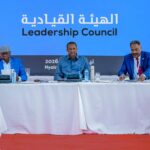
The recent Banjul Declaration, along with many reports and announcements, reveals the downfall of many of those who crafted the initial war narrative from all sides, or those who worked to perpetuate it. The government led by Burhan rejected this narrative yesterday. The construction and adoption of war narratives sometimes relies on the transmission and manipulation of events to achieve a narrative victory, oblivious to the suffering of the citizen, who is both the recipient and the victim, based on the saying, “Sentence me to death and let me read the verdict.”
Therefore, given the continuity of war narratives, journalistic accounts of the war now depend on the strength of the political movements employed by the various national, regional, and international warring factions. This is in contrast to reports that rely on war narratives orchestrated by both sides to inflate emotions and garner sympathy, such as those produced by small-time war content creators in the name of victims, particularly displaced persons. Examples include Minawi’s recent visit to Darfur displacement camps in the Northern State with a French parliamentarian, and the events unfolding in all areas controlled by the warring parties and their supporting forces.
The world is now working to adopt a new war narrative based on the formation of new political alliances. As the war evolves and continues, we may witness the emergence of new narratives concerning human rights violations, or perhaps a reality where the various warring factions are distinguished, or even narratives that hasten a lasting peace in Sudan.
However, everything related to the beginning of the war of narratives in the context of the Sudanese war is dead and buried. It is currently only used within the context of the interests of regional and international powers.
In conclusion :
Combating narratives in underdeveloped societies is not merely “counter-propaganda,” but rather a long-term project aimed at transforming the “oppressed individual” into an “active” and participatory individual, through mobilizing energies and building trust.