Darfur Follow-ups – Port Sudan
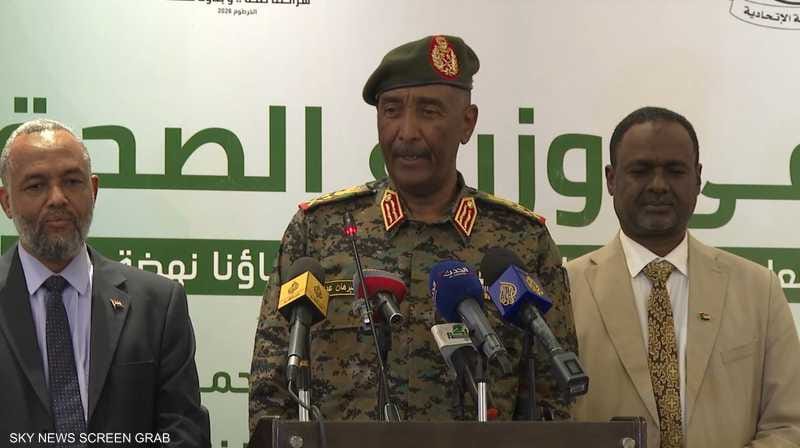
Statements by Abdel Fattah al-Burhan, regarding the involvement of doctors working in hospitals in southern Khartoum in providing military intelligence to the army during the early days of the war, have sparked widespread debate about medical neutrality and the limits of ethical obligations in the context of a conflict marked by chaos and institutional collapse.
Speaking at a health forum in Khartoum, al-Burhan said that “doctors in hospitals in southern Khartoum, including Bashair Hospital, supplied the army with continuous information about the movements, vehicles, and meetings of the Rapid Support Forces (RSF),” adding that “a significant part of the army’s success in that area is due to these efforts.”
These statements have revived fundamental questions about the relationship between medical practice and the demands of war, particularly in an environment where the traditional rules of conflict are not respected, and where health facilities and personnel are repeatedly targeted.
Health sector workers warned that al-Burhan’s remarks could endanger the lives of thousands of doctors by associating them with intelligence activities, even though those suspected of involvement may represent only a small minority.
According to data released by Sudan Doctors Network, 234 medical personnel have been killed and 507 injured since the outbreak of the war, amid escalating attacks on healthcare facilities in conflict areas.
A legal expert noted that such statements could place the doctors involved in violation of international humanitarian law, which requires medical personnel to maintain neutrality and prohibits them from providing military or intelligence support to parties in a conflict.
Observers fear that this controversy may further erode trust in the neutrality of the healthcare sector, at a time when medical facilities are expected to remain safe spaces for civilians, free from military polarization.
Unprecedented complexities
Dr. Ahmed Khalifa, a consultant physician working outside Sudan, interprets al-Burhan’s statements through the lens of the unprecedented complexities surrounding the Sudanese war.
He points out that this conflict differs from the classical models upon which international humanitarian law was built, making its application on the ground far more problematic.
In remarks , Khalifa emphasized that the principles of medical neutrality, protection of healthcare personnel, and confidentiality of information are fundamental pillars of medical ethics. These principles are clearly enshrined in the Geneva Conventions, which guarantee the protection of medical workers and prohibit targeting or exploiting them in military operations.
However, he notes the difficulty of applying these principles to the Sudanese context, explaining that “international humanitarian law was designed for conventional war environments, whereas the war in Sudan, in many aspects, does not respect these rules.”
He adds that the individuals referenced by Abdel Fattah al-Burhan “do not represent the broader medical community, but rather limited cases, and according to the statements, what they engaged in was intelligence activity outside the scope of medical work.”
Khalifa stresses that the overwhelming majority of doctors have adhered to professional standards despite harsh conditions, noting that healthcare workers themselves have been direct victims of the conflict, with some subjected to killings and abuses by different parties.
Serious legal implications
According to legal expert Kamal Mohamed Al-Amin, these statements open a highly dangerous legal dimension regarding the status of doctors under international humanitarian law.
He explains: “Such statements expose the doctors concerned to prosecution for holding a dual role medical and intelligence which strips them of individual protection. At the same time, they expose them to retaliation by the opposing party, creating both ethical and legal responsibility on al-Burhan to disclose their identities.”
Al-Amin told that the Geneva Conventions of 1949 and their Additional Protocols of 1977 grant exceptional protection to medical personnel, conditional on their neutrality “but al-Burhan’s statements effectively undermine this protection.”
He highlights that Article 19 of the Fourth Geneva Convention clearly states that protection of civilian hospitals ceases only if the facility itself is used for acts harmful to the enemy, after due warning and reasonable time. However, he stresses that an individual’s conduct does not make an entire hospital a legitimate target, as criminal responsibility in international law is individual, not institutional.
He further notes that under Article 21 of Additional Protocol I, protection for medical personnel is lost if they engage in hostile acts outside their humanitarian function.
Providing military intelligence on troop movements, he explains, technically falls under “acts harmful to the enemy,” which strips the individual doctor of protection and may render them a legitimate target under the rules of engagement.
While international bodies such as the World Health Organization and the International Committee of the Red Cross assess attacks on hospitals based on independent verification, Al-Amin warns of the broader danger of such statements.
“Al-Burhan’s remarks create a dangerous precedent any party to a conflict could claim medical staff cooperation to justify targeting hospitals,” he says. “If such arguments are accepted as legal justification, the entire system of medical protection could collapse. However, if independent evidence proves that a hospital itself was used as a platform for military activity not merely that some individuals shared information this could affect how such attacks are judged.”
He also points to potential implications for the army itself: “If these statements are used to justify previous attacks on hospitals, they could demonstrate that the army knew of the civilian presence and still proceeded, thereby increasing, rather than reducing, criminal liability.”
Erosion of neutrality
Al-Burhan’s statements raise a deeper issue regarding the erosion of the concept of “neutrality” in modern wars, particularly in complex internal conflicts where civilian and military roles increasingly overlap, and institutions including healthcare become subject to polarization or exploitation.
Alaa Mahmoud, a medical intern who worked in a hospital in southern Khartoum, noted that some hospitals witnessed the repeated entry of new personnel, widely believed to be affiliated with support brigades linked to the Muslim Brotherhood, effectively forming a civilian wing supporting armed operations on the ground.
She said : “It is dangerous to generalize al-Burhan’s statements to all doctors, as this exposes them to serious physical and legal risks.”
Observers argue that any breach of medical neutrality whether by individuals or institutions threatens not only the safety of healthcare workers but also public trust in the health system as a whole, undermining one of the most critical humanitarian pillars in times of conflict.
In this context, journalist and political analyst Mohamed Al-Mukhtar Mohamed says that holding the entire medical community accountable for individual actions remains deeply problematic, especially in the absence of a safe environment that allows full adherence to professional standards.
“This debate reveals a sharp ethical and legal dilemma,” he concludes, “about how to preserve medical neutrality in a war that does not recognize its own rules a question that will remain open unless there is genuine will to restore the primacy of law and humanity at the heart of the conflict.”