Nyala – Darfur Follow Ups | Special Report
When a detainee walks out of Digrais Prison in Nyala, it does not always mean that their story is over. Some survivors emerged with bodies ravaged by hunger, illness and torture. Others carried news of men who had died, while their families continued waiting for their return , unaware that they were dead or where their bodies had ended up.
In other cases documented by Darfur Follow Ups, according to the recent testimony of one survivor, a relative of a released detainee may remain in Nyala as a “guarantor” of their silence, at risk of arrest if the survivor speaks to the media.
This is how the recent releases have begun to expose what is happening behind the walls of one of Darfur’s most secretive detention facilities.
Over the past two weeks, the Rapid Support Forces (RSF) have released more than 70 detainees from Digrais Prison and other detention facilities in Nyala, including civilians, leaders of the native administration, and RSF military personnel.
Multiple RSF sources said that a high-level committee comprising representatives from the judiciary, prosecution, legal bodies, police and intelligence services has begun reviewing detainees’ files at a rate of around ten cases per day, investigating the reasons for each person’s detention and deciding on each case.
But rather than closing the Digrais file, the releases have raised an even more serious question:
If dozens of people are now being released after their cases are reviewed, how many remained behind bars for months or years without trial? And how many died before their files ever reached the review committee?
200 People in a Single Warehouse
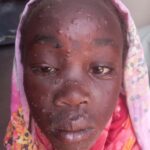
Just two days ago, one of the most harrowing testimonies yet known from inside Digrais emerged. A survivor using the name “Omar” spoke 18 days after his release, having spent more than a year in Digrais after being arrested among thousands of civilians from El Fasher.
According to the journalist who interviewed him, the man appeared severely emaciated and repeatedly had to pause while speaking to catch his breath, as his body was still recovering from the effects of starvation and torture.
His refusal to show his face was not motivated by fear for himself alone. He said that one of his relatives remains in Nyala as a guarantor of his release, and that appearing in the media could lead to that relative’s arrest.
Inside the detention facility, the survivor described around 200 people being held in a single warehouse, in conditions where disease, hunger and overcrowding converged. There, according to his testimony, death was no longer an exceptional event; it had become part of daily life inside the prison.
Families Waiting for Men Who Had Died Months Earlier
In Rehaid al-Birdi, three families waited for their sons for months without knowing they were already dead.
Omar Ahmed al-Sheikh, Mukhtar Habib al-Hijazi, and Ahmed Ismail Mohammed were arrested along with more than 20 people in June 2025 on accusations of cooperating with the army. The fate of the three men remained unknown. Their families received no official notification of their deaths, no call from the prison administration, and no medical reports or information about the causes of death.
More than a year after their arrest, other prisoners emerged from Digrais carrying the news: the three men had died inside the prison around three months earlier. That was how their families learned that the waiting was over—not with their sons returning home, but through the testimony of people who had been imprisoned alongside them.
Survivors Carry News of the Dead
The same scene was repeated in the town of Buram, when the Rapid Support Forces arrested Idris Mohammed Saleh, director of the Civil Service Bureau in Buram locality, in February during an arrest campaign. He was accused of loyalty to the army before being transferred to Digrais.
His family waited for news. Then released detainees emerged from the prison and told them that Idris had died in mid-June. The force that arrested him did not notify the family of his death, and according to the family’s account, they did not know what happened to his body or what arrangements had been made for his burial.
The family of Ahmed Ismail Hussein learned of his death in the same way. Released detainees had effectively become human messengers carrying news of death from inside a place families could not easily enter.
215 Deaths in Less Than Two Months
But the cases of Idris, Omar, Mukhtar and Ahmed are only a handful of names within a much larger figure.
The Justice Committee documented the deaths of more than 215 detainees inside Digrais during May and June 2026 alone—an average of more than three deaths per day over the two-month period.
Rights reports have linked the deaths to outbreaks of disease, deprivation of medical care, and detention conditions lacking the most basic necessities of humane treatment. International reports also referred to 31 detainees, including children, who were transferred to Nyala Hospital and whose fate remained unknown at the time the report was issued.
A former detainee, identified by Darfur Follow Ups only by the initials “A.S.” to protect his identity, said that a number of prisoners, particularly those suffering from chronic illnesses, died as a result of deteriorating health conditions and the lack of available treatment. He added that for someone suffering from diabetes or high blood pressure, the absence of medication could turn an existing illness into a life-threatening condition inside detention.
The Prison That Became a Hub for Detainees
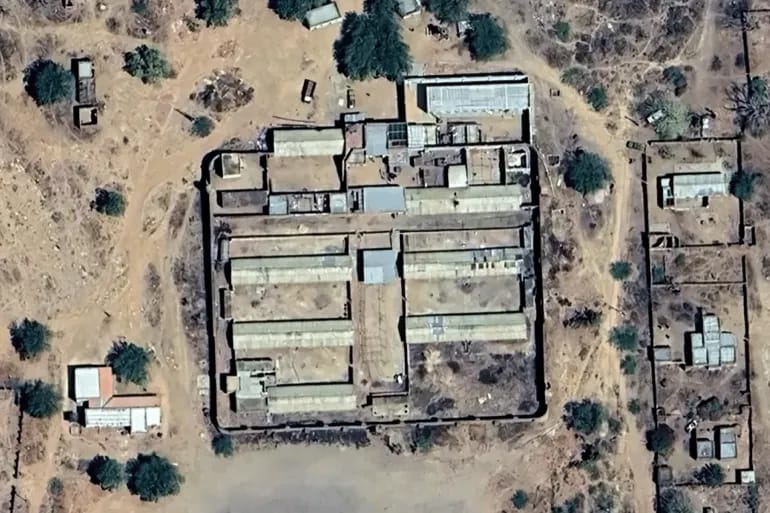
Digrais is located approximately 25 kilometres west of Nyala. The facility was originally established as a correctional institution, but after the Rapid Support Forces took control of South Darfur, it became, according to rights and media reports, one of the largest centres for gathering detainees brought in from multiple areas.
Its detainees no longer come from South Darfur alone. Testimonies and reports have referred to detainees from Darfur, Kordofan, Khartoum, Al Jazirah and Sennar, including civilians, military personnel, government employees and people from various professions.
There is no independently verifiable figure for the current number of detainees, and published estimates vary widely—something that in itself reflects the level of secrecy surrounding the facility. While former detainees have spoken of thousands of people, the Sudanese government said in a memorandum submitted to the UN Security Council that it had information indicating that around 19,800 detainees and prisoners were being held in Digrais, including approximately 5,000 civilians from El Fasher, 5,434 civilians from various professions, 73 medical personnel and 690 women, in addition to military personnel, police officers and intelligence personnel.
Darfur Follow Ups cannot independently verify these figures due to the Rapid Support Forces’ lack of cooperation. What is clear from the convergence of multiple sources, however, is that Digrais is no longer an ordinary local prison; it has become a central destination for detainees taken from across vast areas of Sudan’s war.
Money in Exchange for Freedom
For months, rights organisations have documented another dimension of the case: paying money in exchange for release from prison. The Justice Committee and Emergency Lawyers said they had documented cases in which detainees’ families were asked to pay money in exchange for their release, describing the practice as financial extortion. Darfur Follow Ups has also documented that the majority of those released recently paid substantial sums of money in order to breathe the air of freedom again.
But Omar’s recent testimony goes further. He said that the practice of releasing some detainees in exchange for money had intensified over the past two months, and that the sums demanded, based on his own case and his knowledge of others, ranged between 30 million and 35 million Sudanese pounds.
According to his account, the process does not end with payment. He said that some of those released are required to travel to South Sudan via Ed Daein, while another person remains in Nyala as a guarantor of the released detainee’s silence. If the survivor speaks, someone else may pay the price.
Women Behind Bars
The secrecy surrounding RSF detention facilities is not limited to men. Previous reports have referred to women being detained in Nyala, while recent information from the “Women for Peace and Security” group indicated that women arrested in different parts of Darfur had been transferred to Digrais, in addition to women whom the group said were being held inside houses in Nyala.
Earlier reports documented the release of Islam Ahmed Abkar after approximately 50 days in detention while she was in an advanced stage of pregnancy, along with other women from Korea Prison in Nyala. Former female detainees spoke of women and children being held in harsh conditions and facing shortages of water and food.
The Rapid Support Forces, meanwhile, have previously denied holding women in detention and rejected allegations related to this issue.
Patients Without Medicine, Families Without Visits
In July, the Justice Committee documented the continued detention of people in Nyala for months without legal proceedings or referral to trial, alongside the deteriorating health of some detainees, the denial of medical treatment to others, and restrictions preventing families from visiting them.
This information is consistent with testimonies from families in Buram and Rehaid al-Birdi, who said they had faced difficulties obtaining information about the condition of their relatives, as well as visiting them in detention.
Where Are the Bodies of Digrais’s Dead?
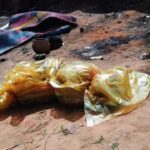
Amid dozens of testimonies about hunger, illness and torture inside Digrais Prison, one question emerges that may be even more painful than death itself: What happens to a detainee’s body after they die?
Darfur Follow Ups traced several reported deaths inside the prison and found that some victims’ families had received no official notification, while others had received no clear information about where their relatives were buried.
In the case of retired police assistant Hamadi Zakaria, the family did not simply wait for news. After being informed of his death, relatives went to the prison to retrieve his body. But according to the testimony of one family member, they were prevented from entering the detention facility and the forces refused to hand over the body.
The family of Mohamedain Mohammed Abdelrahim Abdelshafi, who suffered from diabetes before dying inside Digrais, was informed of his death without details about the date or cause. Even after his case was documented by rights organisations, his body, according to the latest published information, had still not been handed over to his family.
In Buram, the family of Ahmed Ismail Hussein did not know what had happened to his body at all. They received no official notification of his death and no information about the arrangements made for his burial.
The families of Idris Mohammed Saleh, Omar Ahmed al-Sheikh, Mukhtar Habib al-Hijazi, and Ahmed Ismail Mohammed, meanwhile, learned of their deaths from people who survived and were released from the prison, after some of the victims had already been dead for months.
The recurrence of this pattern reveals a gap even more serious than the absence of medical care: the absence of a declared and transparent process for documenting death itself. There is no published list containing the names of all those who have died, no accessible register showing the date and cause of each death, and no publicly available information identifying the doctor who certified the death, whether the bodies underwent medical examination, where they were buried, who authorised their burial, or whether their families were notified before their relatives were laid to rest.
Human rights lawyer “M.S.” said that the documentation of more than 215 deaths within two months, amid incomplete information about those who died, raises fears that there may be cases whose news has still not reached the outside world including the possibility that families are continuing to search for relatives they believe are still detained, without having updated information about their fate or whereabouts.
Releases Do Not Erase What Happened
The Rapid Support Forces say the new committee is examining detainees’ files and deciding to release those against whom no charge can be established.
Legal experts and human rights advocates argue that forming a committee to review detainees’ files does not close the Digrais case. Instead, it opens another file concerning what happened before the committee was established: arrest orders, prolonged periods of detention, the absence of trials and legal representation, as well as responsibility for the conditions endured by detainees who became ill or died inside the prison.
A human rights source who asked not to be named told Darfur Follow Ups that releasing people after months of detention places an obligation on the detaining authority to explain the legal basis on which those individuals were deprived of their liberty throughout that period, the judicial procedures taken against them, and to provide a clear record of detainees who died while in custody.
The source added that the seriousness of the Digrais case does not end with the number of deaths, but extends to the absence of basic information concerning the dead, including medical records, causes and dates of death, notification of families, the fate of the bodies, and burial locations.
The source stressed that reviewing the files of those who remain alive, while important, cannot substitute for an independent investigation covering the entire detention system and what took place within it—one that accounts for the living, the sick, the dead and the missing, and preserves families’ right to know the fate of their relatives.
A Prison That Does Not End at Its Gates
Behind the figure of more than 70 people who have been released, an unknown number of detainees remain inside Digrais. At the same time, medical and human rights groups have documented more than 215 deaths within two months, amid cases in which families said they received no official notification of death, and others in which they were given no clear information about the bodies or burial locations.
These facts keep the Digrais file open even after releases began and detainees’ cases started being reviewed, amid the absence of an independent and publicly available accounting of everyone who has passed through the prison, those who remain inside, those who died in detention, and the fate of bodies that were never returned to their families.
Between those who emerged alive and those confirmed dead, a third group remains less visible in published records: people whose families are still searching for a piece of information that could determine their fate.
For those families, the issue is not simply the number of people released or the death toll. It is about knowing what happened from the moment of arrest until the last known trace of their relatives: who remains alive, who died in detention, and whose fate remains unknown behind the doors of Digrais.